


I started September with a simple question in my notes file: “Does any of this actually make money?”
That question has followed me through every issue. Believers always said the money would come. Critics always said prove it. Both had a point.
September is when someone finally showed the receipts.
SubConnect's first Bittensor Revenue Index, published in late August, reframed the entire ecosystem conversation. The report estimated $28 to $35 million in annual recurring revenue across 24 subnets, with 14 running active token buyback programs. The numbers are estimates, not audits, but the shift matters.
The rest of the month built on that frame. Yuma crossed $200 million in staked assets. Bittensor hosted its first native conference with a new protocol announcement. A robotics subnet shipped real-world validation tools. And accessibility tools finally made the ecosystem navigable beyond Discord.
Five stories. Here is your compass.
How to read this compass
I’m organizing these updates by direction: North, East, South, West to give you a repeatable mental model for navigating Bittensor’s complexity.
North: Foundation 🏛️ (governance, protocol, core team, security events) The structural layer. Changes here determine who controls the network and how decisions get made.
East: Capital 💹 (markets, volume, liquidity, integrations) The economic layer. This is where price meets liquidity and institutional conviction shows up in the data.
South: Technology ⚙️ (shipped features, benchmarks, infrastructure, ecosystem health) The execution layer. What actually works, what got built, and where’s the technical proof.
West: Adoption 📡 (narrative, mainstream validation, external voices) The perception layer. How the outside world sees Bittensor, from industry titans to normie investors.
This month, East dominated the signal with two stories that redefined how people talk about Bittensor’s economics. North delivered the ecosystem’s cultural milestone. South shipped something you can touch. And West finally showed signs of life after months of silence.
🏛️ Gamma tokens: Bittensor’s infrastructure becomes currency
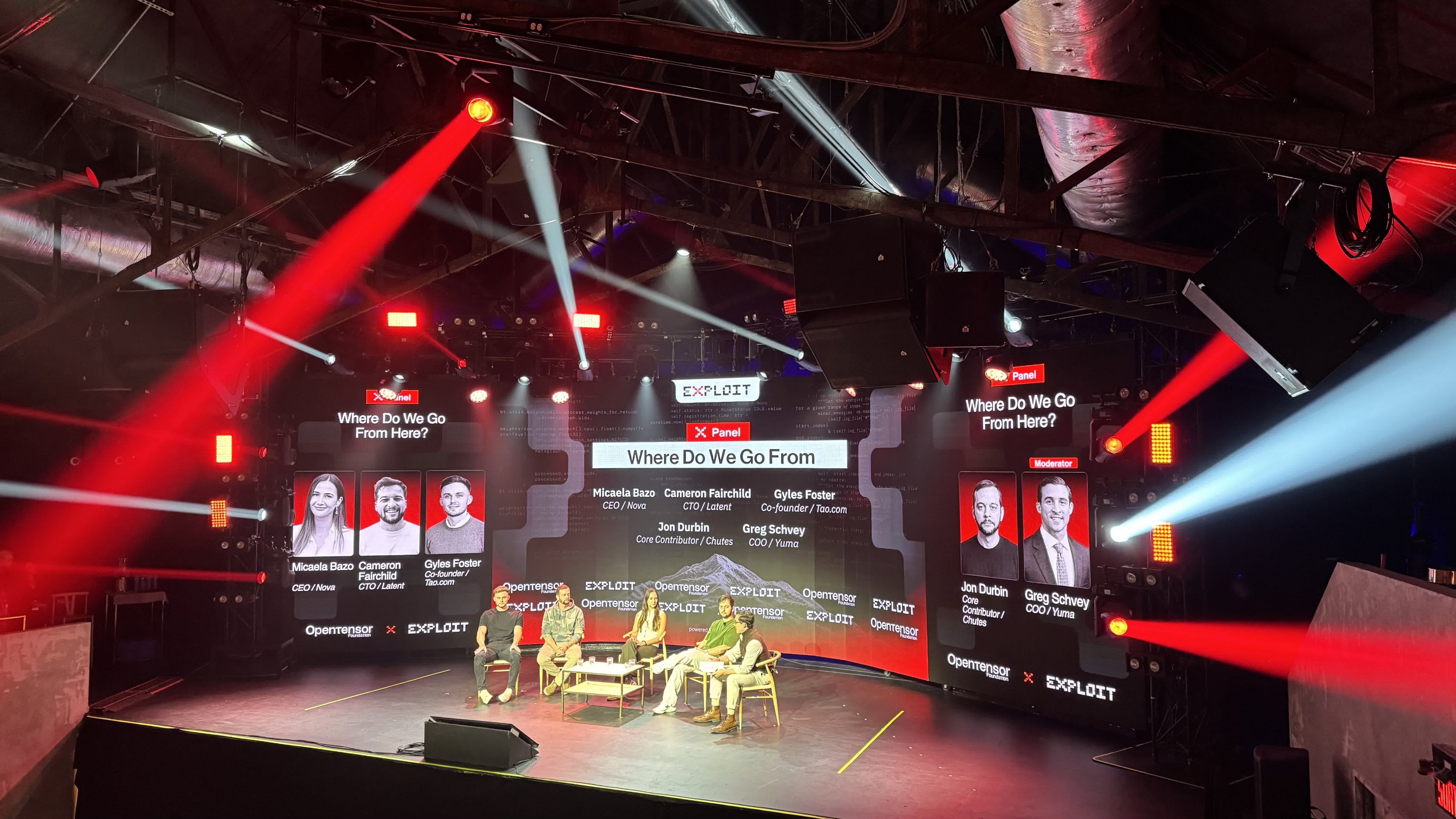
Const took the stage at Exploit Summit on September 28 in Montréal and dropped a significant protocol announcement. He called them gamma tokens.
Exploit Summit was Bittensor’s first native conference, a two-day event at on September 28 and 29 that brought over 100 builders together. The conference itself was a milestone, but the thing everyone left talking about was gamma tokens.
Gamma tokens are a canonical standard for usage credits on Bittensor, coming in early 2027. Think prepaid gift cards for subnet infrastructure, except they’re fungible, transferable tokens that live on-chain instead of behind a login screen.
Right now, if you want to rent compute on Lium, run inference on Targon, or store data on Hippius, you go to each subnet’s website, create an account, and pay through their specific interface. Gamma tokens collapse all of that into a single standard. You buy a gamma token for Lium, hold it in your wallet, transfer it to someone else, or use it to rent compute. And because they’re bridgeable, an AI agent on Base or Ethereum could autonomously buy gamma tokens, rent a GPU, run inference, and return results without a human touching a keyboard.
Const named the issuers: Chutes, Engy, GM, Lium, Targon, Hippius, and Affine. Those are the infrastructure providers. Every other subnet becomes a customer.
The internal play is where it gets interesting.
Subnets could redirect portions of their emissions to purchase gamma tokens from other subnets.
Const framed this against a specific number: 80% of capital raised by San Francisco AI startups goes to compute. On Bittensor, subnets would fund that compute internally. The money stays in the ecosystem.
He also announced canonical bridges to measure external demand. If someone on another chain buys a subnet’s usage credits, that flow becomes a metric for directing emissions. Subnets that attract real customers from outside Bittensor get rewarded.
Why it matters: Bittensor has been building infrastructure in isolation for years. Compute, storage, inference, training. Each piece works. But the pieces haven’t been composable. Gamma tokens make that infrastructure layer interoperable and programmatically purchasable. An AI agent doesn’t need a GitHub account or a Discord invite. It needs a wallet and gamma tokens. The gap between a subnet that produces benchmarks and a subnet that produces revenue just got easier to close.
The takeaway: Watch for the gamma token specification. The subnets that become issuers (Lium, Targon, Engy, Chutes, Hippius, Affine) are selling picks and shovels during a gold rush. Every other subnet becomes a potential customer. If you’re evaluating which subnets to back, the infrastructure providers that issue gamma tokens are the ones every other subnet depends on.
💹 SubConnect’s Bittensor Revenue Index: the first real census
SubConnect published the first Bittensor Revenue Index (Volume I) in late August, and by September it had become the defining frame for ecosystem discussion. The report estimates $28 to $35 million in annual recurring revenue across 24 subnets that are generating commercial income. 14 of those subnets are running active token buyback programs, using real revenue to purchase their own alpha tokens on the open market.
The report is an estimate, not an audit. The revenue figures are modeled based on publicly available data, API usage metrics, and self-reported numbers. SubConnect acknowledged the limitations, but the framing is what shifted the conversation.
RVCrypto, who collaborated on the research, said he expects Bittensor subnets to collectively reach $100 million in revenue.
Why it matters: SubConnect’s Index is the first serious attempt to ground the external revenue debate in numbers. $28 to $35 million in ARR is modest compared to a single mid-tier SaaS company, but it’s real money flowing through decentralized AI infrastructure. And 14 subnets running buybacks means that revenue is creating direct demand for subnet tokens, which is the economic flywheel the dTAO model was designed to produce.
The deeper question is this: can these subnets become real businesses? Generating revenue is step one. Building a sustainable business with margins, customer retention, and competitive moats is something else entirely.
The takeaway: Use the Revenue Index as a screening tool: the subnets generating real revenue with active buyback programs are the ones worth watching closely. The ones with no revenue and no buyback mechanism are running on emissions alone, and emissions are a shrinking resource post-halving. The next volume of the Index will matter more than this one, because it will show whether revenue is growing or flatlining.
💹 Yuma crosses $200 million in staked assets
On September 14, DCG subsidiary Yuma reported more than $200 million in TAO and subnet tokens staked to its Bittensor validator. That makes Yuma the largest validator on the network by staked value. The company also disclosed that its accelerator has supported 20 subnets.
Business Insider covered the milestone. Yuma’s own year-end roundup framed it as progress toward growing the Bittensor ecosystem through infrastructure investment and subnet acceleration.
Why it matters: $200 million in staked assets from a DCG subsidiary is the most concrete institutional conviction signal in Bittensor’s history. This isn’t a fund allocation or a token purchase for trading. It’s capital committed to securing the network and backing specific subnets through Yuma’s accelerator. When Yuma stakes TAO to its validator and directs yield toward subnet tokens, it is making a portfolio decision about which subnets deserve institutional backing. That shapes emissions, liquidity, and which subnets survive the competitive pressure of the dTAO market.
The counterpoint is that $200 million staked with a single validator also concentrates influence. Bittensor’s governance is designed to be decentralized, and having one entity control that much stake raises questions about influence. The V450 root basket concentration cap (another protocol upgrade) is partly a response to this kind of concentration.
The takeaway: Follow Yuma’s accelerator portfolio. The 20 subnets they’ve backed are the ones with institutional backing, mentorship, and capital. Some will succeed and some won’t, but Yuma’s selections tell you which subnets serious money is betting on. Just remember that institutional backing is a signal, not a guarantee. Quasar (SN24) had institutional backing too, and it collapsed in August when an audit showed the model was plagiarized.
⚙️ OpenRoboto (SN80): the robotics subnet breaks out
OpenRoboto had the kind of month that makes you pay attention to a subnet you’d been scrolling past.
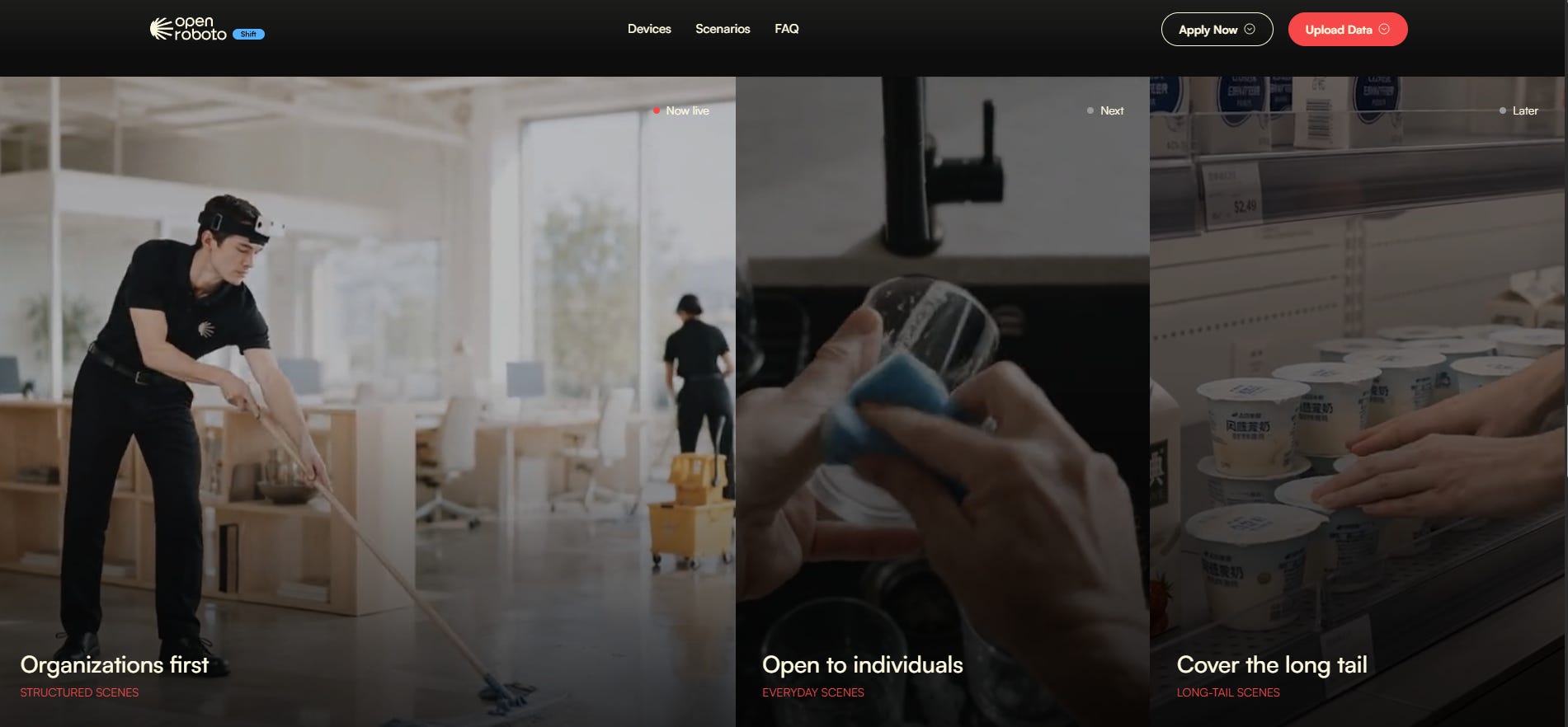
On September 22, the team launched OpenRoboto Shift, a new initiative to collect first-person robotics data on Bittensor. Three days later, they partnered with Axis Robotics to release the Open Axis Benchmark, a standardized evaluation framework for robot models. They also brought an xArm 6 robotic arm online to validate winning simulation models on physical hardware, and they switched their community post-training base model to LingBot-VLA 2.0.
Why it matters: Bittensor has needed a successful robotics subnet for a long time. Most subnets compete on text, code, or compute because those are the easiest things to verify on-chain. Robotics is harder. You can’t just check the output of a language model and score it. You need to evaluate whether a robot actually completes a physical task, which means bridging from simulation to real hardware.
OpenRoboto is building that bridge. The xArm 6 validation loop means winning models from the subnet’s simulations get tested on a real robot arm. The Open Axis Benchmark gives the ecosystem a shared scoring system. And the Shift data collection initiative addresses the biggest bottleneck in robotics AI: getting enough diverse, real-world training data.
This is the kind of subnet that makes Bittensor tangible for people who don’t care about tokenomics. You can show someone a robot arm executing a task that a decentralized network trained, and they understand it without needing to know what dTAO means.
The takeaway: Watch the Open Axis Benchmark adoption. If other robotics projects start using it as a standard, SN80 becomes infrastructure for the entire robotics AI space, not just a Bittensor subnet. That is the kind of positioning that attracts researchers and funding from outside the crypto bubble.
📡 Ecosystem tooling: the front door finally opens
September saw a wave of tools launch that make Bittensor accessible to people who don’t read code:
TaoFlows expanded its Bittensor terminal on September 3 with subnet swaps, watchlists, on-chain alerts, and a portfolio dashboard. You can now track your subnet positions, get notified when something moves, and swap between subnet tokens without navigating multiple interfaces.
TaoBubbles launched a visual subnet bubble map on September 17, showing the entire Bittensor subnet economy at a glance. Each subnet is a bubble sized by market metrics, giving you a visual snapshot of where value is concentrated.
SubnetRadar added a new Code column that scores public GitHub repository activity across subnets. You can see which subnets are actually committing code and which ones have gone quiet.
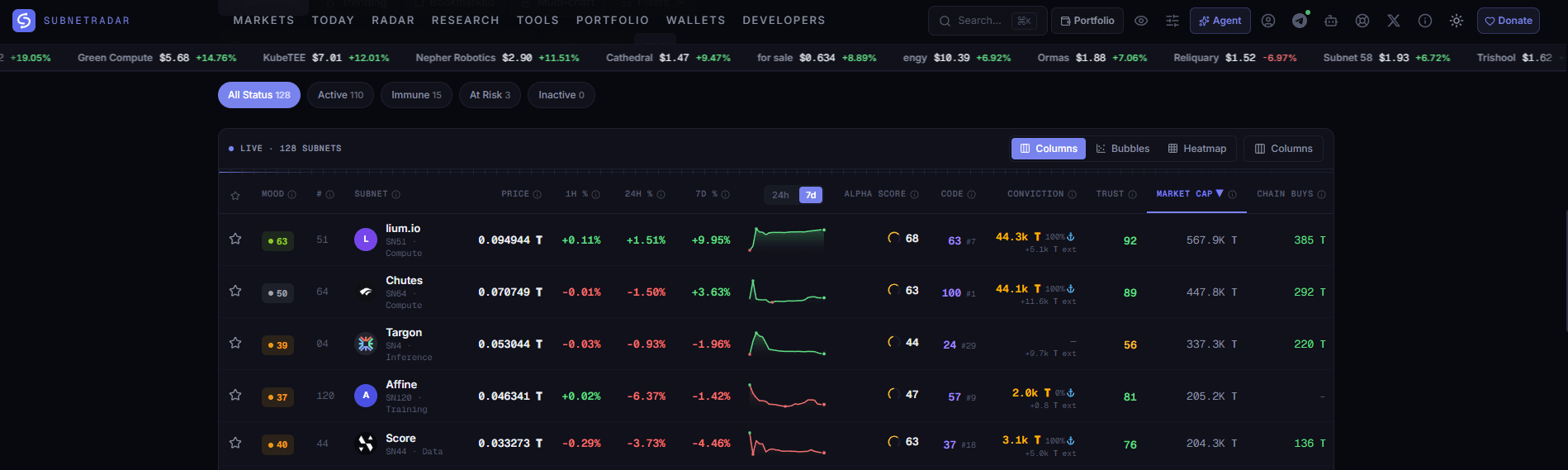
Why it matters: Bittensor’s biggest problem isn’t technology, it’s accessibility. The ecosystem has been built by coders, for coders. If you don’t know how to navigate taostats, parse GitHub commits, or understand emission mechanics, you’re locked out. These tools are the front door. TaoFlows’ portfolio dashboard is UX a retail investor expects. TaoBubbles’ visual map is what you can share with someone who has never heard of Bittensor and they’ll understand it in 10 seconds. SubnetRadar’s Code column separates serious builders from squatters.
The takeaway: If you’ve been waiting for Bittensor to become navigable before diving in, these tools are your entry point. Start with TaoBubbles to see the landscape. Use SubnetRadar to check which subnets are actually building. Track your positions with TaoFlows. You don’t need to be a coder to participate anymore.
Final thoughts
East (Capital) ran this month. The SubConnect Revenue Index and Yuma’s $200M milestone together framed Bittensor as an emerging market with real revenue and institutional capital. That reframing matters more than any single price movement or protocol upgrade, because it changes the type of investor who starts paying attention.
South (Technology) continued its steady march. OpenRoboto shipped more in one month than most subnets ship in a quarter, and they did it in the hardest category on Bittensor: physical-world robotics.
North (Foundation) delivered a major protocol upgade and a cultural milestone. Exploit Summit gives Bittensor a physical presence and a shared calendar event that the ecosystem can rally around.
And West (Adoption), after months of silence, finally showed up. The tooling wave is early-stage and rough around the edges, but it’s real. People who don’t read code can now navigate this ecosystem. That has been the missing piece since I started writing this newsletter.
The SubConnect Index says $28 to $35 million in ARR. RVCrypto says the target is $100 million. The gap between those two numbers is the entire investment thesis for Bittensor subnets right now. If revenue grows, the flywheel spins faster. Buybacks increase. Token prices reflect fundamentals. More builders enter. More revenue.
If it doesn’t grow, the emissions-only subnets start dying off, and the ecosystem contracts to the ones with real customers.
I think it grows. The tools are getting better, the capital is deepening, and the products are shipping. But I’ve been wrong before, and I’ll be wrong again. The Revenue Index gives us a baseline. Volume II will tell us whether we’re climbing or flatlining.
Until next time.
Cheers,
Brian
Disclaimer: This is not financial advice. I am a writer documenting the Bittensor ecosystem. Always do your own research.