

I started writing this piece in my head during the first week of August.
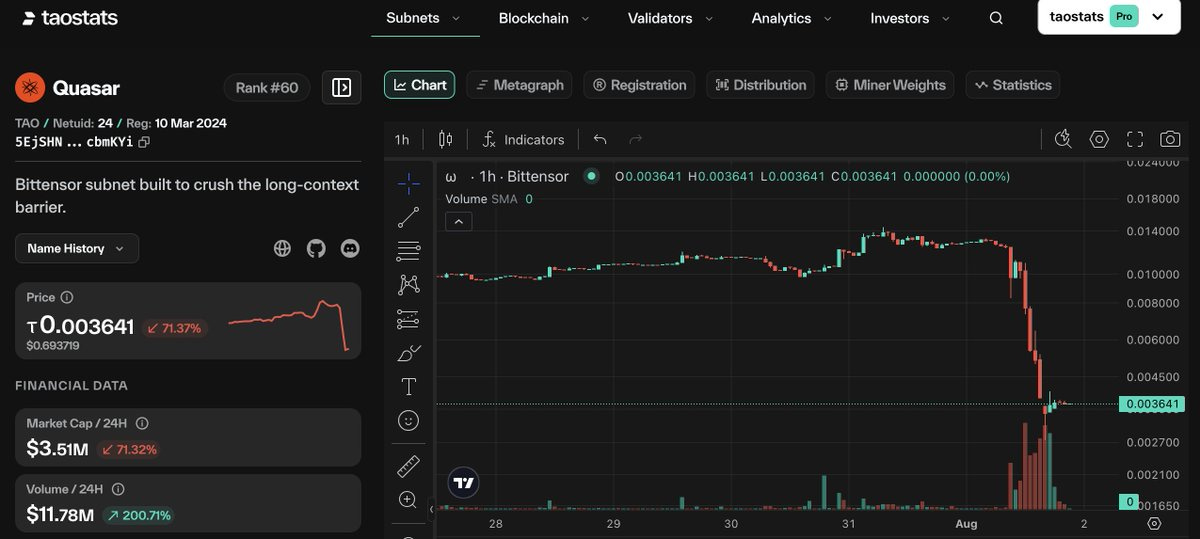
An audit had just found that a subnet called Quasar (SN24) was running a model 98% identical to an existing open-source model, and its token had crashed 75%.
Two compute subnets, Chutes and Engy, were publicly fighting over inference pricing with benchmark results being published on X.
A falling-out between a subnet builder and his former collaborator had escalated into a public Cold Key custody dispute.
My notes file had “conflict” written as the guaranteed headline in my head.
Root Reborn went live on August 3, the same week all of this was kicking off. The biggest structural upgrade since dTAO. Then TAO bridged to Base on August 20. Then Const announced a 110-billion-parameter permissionless training run on August 24. By the time I sat down to write this, the conflict stories felt a little smaller.
The month had plenty of drama, and two of my five stories are genuinely about subnets going at each other. But the bigger signal turned out to be about who was shipping and at what scale.
Foundation (North) and Technology (South) both had strong months. South edged ahead because the technology shipped at frontier scale while North delivered a culmination rather than a new direction. The baton is passing, so let me show you what happened.
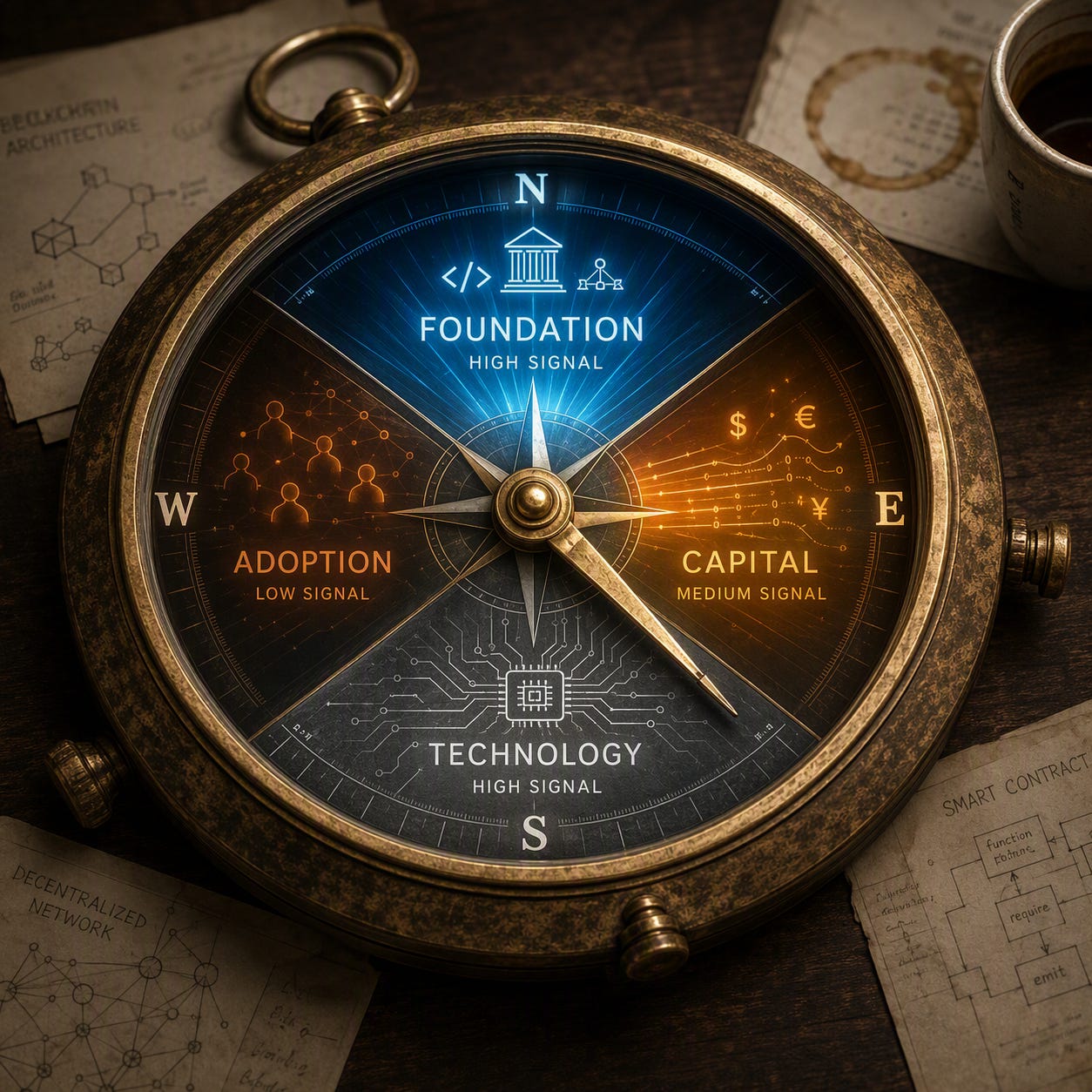
How to read this compass
I’m organizing these updates by direction: North, East, South, West to give you a repeatable mental model for navigating Bittensor’s complexity.
North: Foundation 🏛️ (governance, protocol, core team, security events) The structural layer. Changes here determine who controls the network and how decisions get made.
East: Capital 💹 (markets, volume, liquidity, integrations) The economic layer. This is where price meets liquidity and institutional conviction shows up in the data.
South: Technology ⚙️ (shipped features, benchmarks, infrastructure, ecosystem health) The execution layer. What actually works, what got built and where’s the technical proof.
West: Adoption 📡 (narrative, mainstream validation, external voices) The perception layer. This is how the outside world sees Bittensor, from industry titans to normie investors.
Each month, some directions dominate the signal. Others stay quiet. This month, North and South both moved with real force, East made a single important play, and West stayed silent. Let’s review what happened.
🏛️ Root Reborn goes live
On August 3, Bittensor shipped v4.4.1. The Root Reborn upgrade.
I covered the proposal in June when Const unveiled it, and I tracked the debate through July when Yuma published their moral hazard warning. The core problem was simple: root stakers automatically liquidated subnet alpha tokens, creating persistent structural sell pressure across the entire subnet market. Every time emissions flowed, someone somewhere was dumping.
Root Reborn replaces that mechanism with validator-linked subnet baskets. Instead of blindly converting root yield to TAO and selling, validators now direct their yield into subnet tokens they believe are productive. Messari confirmed it as “a major redesign of how root subnet inflation is managed.”
Why it matters: For the entire post-dTAO era, subnet tokens have operated under an artificial price ceiling. Root yield auto-dumped, suppressing the native economies of every productive subnet regardless of how well they performed. Removing that ceiling changes the economic incentives for validators from passive gatekeepers to active ecosystem asset managers. The sell pressure that has dragged subnet tokens down since launch is structurally gone.
The takeaway: Watch subnet alpha token prices over the next 4 to 8 weeks. If Root Reborn works as designed, the tokens of productive subnets should start reflecting their actual fundamentals instead of fighting a constant drag. The subnets that benefit first are the ones validators already trust.
🏛️ The Quasar rug (SN24)
In early August, SN24 (Quasar) was hit with public allegations that its model and training claims were plagiarised, and that the subnet was being run by people with a history of scams. A reproducible audit notebook showed the model was overwhelmingly inherited weights with only a tiny fraction of new training.
The token crashed around 75% in a few hours as the story spread. Community channels lit up with over 1,500 messages in roughly 25 hours during the peak.
The timing made it worse. On July 31, just days before the audit dropped, the Quasar team appeared on Novelty Search (the weekly Bittensor community call hosted by Const / OpenTensor) claiming they’d trained a 120B SOTA model with 5M context. They positioned it as a breakthrough: decentralized long-context models that could compete with centralized labs.
The governance response was swift following the discovery. By the following week, the old team was officially ousted, the owner was banned from the server, mining was paused, and a cold-key swap was announced under new ownership. On-chain, Quasar’s emissions showed the largest single drop in the v440 gate reshuffle, down roughly 86% to 251k.
Why it matters: The system did what it was supposed to do. An open audit exposed a copied model, and the token price reflected that reality within hours. The real problem runs deeper: Quasar’s legitimacy came from who backed it, not what it built. Investors trusted DSV’s capital and Const’s reputation instead of verifying the technical claims. When a subnet carrying those endorsements collapses under scrutiny, it spreads reputational damage to every other project in their portfolio.
The takeaway: Decentralized AI only has one real advantage over a lab press release: someone else can open the weights. If the checkpoint, step count, lineage, and miner contribution cannot survive that check, the subnet is fundraising in disguise.
⚙️ Teutonic-II: 110B permissionless training
On August 24, Const announced Teutonic-II-110B: a frontier-scale, fully permissionless training run of a 110-billion-parameter LLM on Bittensor Subnet 3.
This is a 10x scale increase from their previous run. In March, Templar made history with a 72B decentralized training run that I covered in my March issue. Teutonic-II is 50% larger than that, and it’s running on a subnet that holders took back through the Conviction mechanism I covered in May. SN3 was one of the three subnets Covenant abandoned in April. The community reclaimed it, onboarded it through Conviction, and now it’s running the largest decentralized pretraining run in history.
Why it matters: This is the execution layer firing at full capacity. In July, I wrote about Chutes training a 20B model for under $10 an hour and asked whether the cost advantage over centralized cloud was still theoretical. Teutonic-II answers that question at a completely different scale. A 110-billion-parameter model trained over the internet, permissionlessly, on a subnet reclaimed by its community through governance. The Conviction mechanism, the Emission Gate, the Root Reborn upgrade, all of it was building toward this kind of proof.
The takeaway: Watch the training progress on SN3 over the coming months. If Teutonic-II completes successfully, it changes the conversation about what decentralized AI can actually do. The leap to frontier infrastructure narrows with every parameter count increase. 110B is getting close to the territory where people outside the Discord have to pay attention.
⚙️ Chutes (SN64) vs Engy (SN53): the inference war
Two inference subnets went to war in August, and the entire ecosystem got to watch.
Engy (SN53) launched the full 2.8 trillion-parameter Kimi K3 model at what they described as “the lowest price on the market.” They did it on gaming cards positioned near cheap energy sources, using TOPLOC cryptographic proofs to verify that miners are actually running the committed models. Engy’s pitch is verified inference at a price no one else can match.
Chutes (SN64) is the incumbent. The largest compute subnet on Bittensor by market cap, a serverless AI compute platform that lets you deploy any open-source model. In June, Chutes moved to Trusted Execution Environments and brought Blackwell B200s online. In July, Chutes trained a 20B model for under $10 an hour. Chutes has scale, infrastructure, and $43M in Q1 real AI revenue.
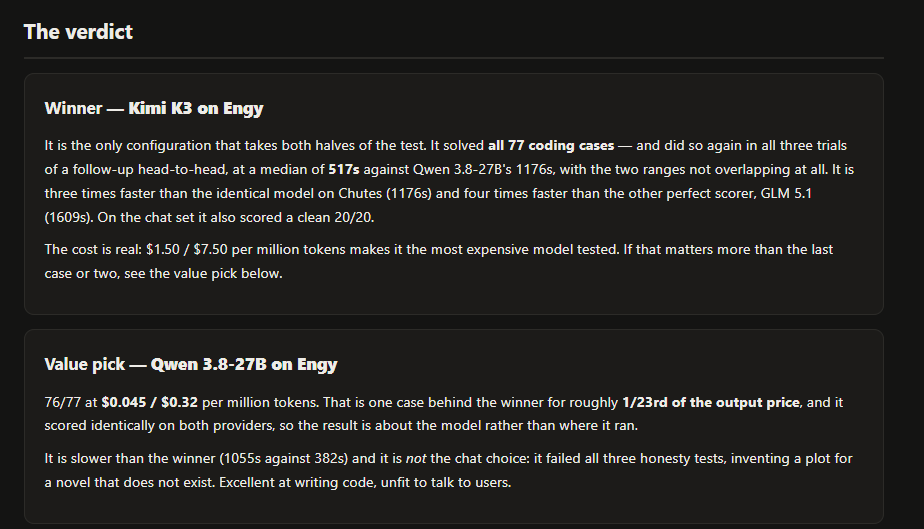
The competitive dynamic broke into public view when James Altucher, who runs BlueTAO.ai, published head-to-head benchmark comparisons of every AI model hosted by both subnets. He tested them across multiple use cases for his AI chat and coding application. The results were published openly for anyone to check. Coding went to Kimi K3 hosted by Engy. The full benchmark results and test methodology are available online.
The subnet founders engaged in a public back-and-forth, with supporters from both sides weighing in across Discord and X.
Then on August 25, Chutes fired back. They proposed a Conviction Lock mechanism for federated AI compute access. If adopted, compute buyers would need to lock stake to access Chutes’ federated compute network. It creates a new demand sink for SN64’s alpha token and makes it economically costly for customers to switch to a competitor like Engy on price alone.
Why it matters: This is the dTAO market working exactly as designed. Two subnets competing on real product metrics: price, model quality, verifiability. Engy’s edge is cryptographic verification and cheap consumer hardware near cheap energy. Chutes’ edge is scale, serverless architecture, and now lock-in through conviction staking. They’re competing on different axes, which is healthy for the ecosystem.
The takeaway: Track the Conviction Lock proposal on SN64. If it passes, Chutes builds a moat that price competition alone can’t breach. Engy’s response will tell you whether they compete on price, technology, or their own lock-in mechanism. The inference war is the most visible subnet competition in the ecosystem right now, and the winner becomes the default compute layer for decentralized AI.
💹 TAO arrives on Base via Chainlink CCIP
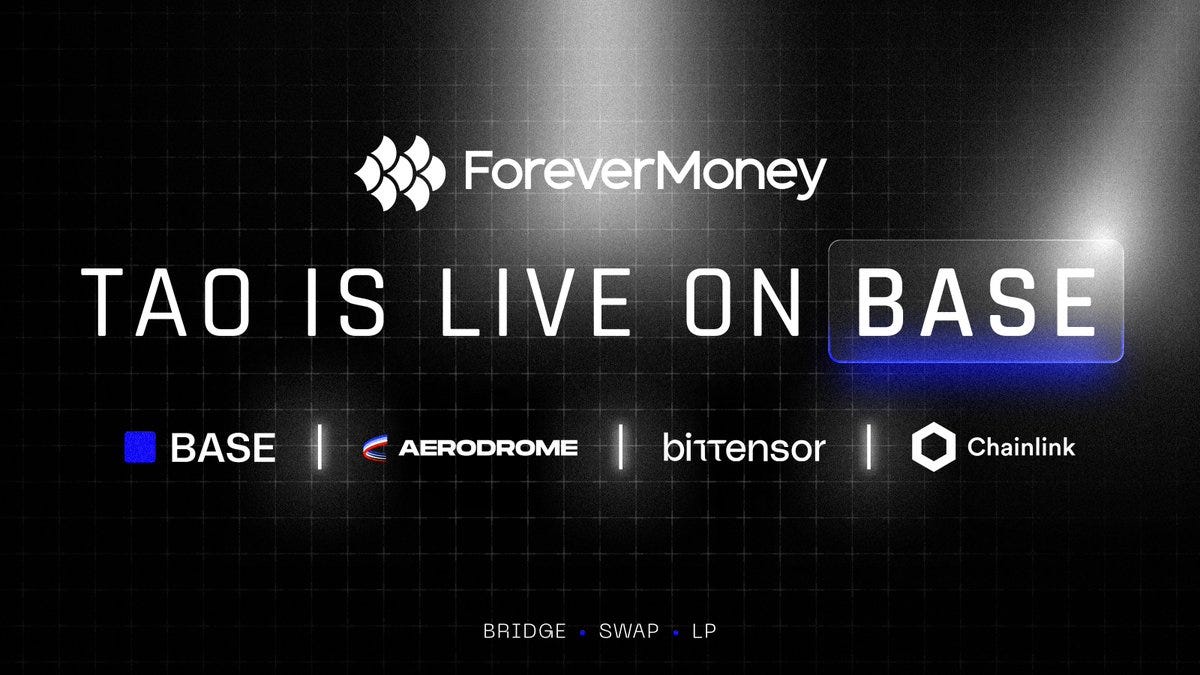
On August 20, TAO bridged to Base through Chainlink’s Cross-Chain Interoperability Protocol. ForeverMoney went live on August 21, letting native TAO move cross-chain. The integration connects Bittensor assets to Aerodrome, Base’s primary liquidity venue, and opens 16 subnets to DeFi liquidity on one of the most active chains in crypto.
Why it matters: Complex on-chain AMM pools, custom wallets, and fragmented liquidity have historically locked out traditional and retail capital from Bittensor’s subnet economy. Bridging to Base through Chainlink’s infrastructure gives TAO access to one of the deepest DeFi liquidity pools in crypto. Aerodrome is where Base’s capital sits and every cross-chain integration like this expands the pipe through which capital can flow into and out of the Bittensor ecosystem without forcing investors to learn subnet-specific mechanics.
The takeaway: Watch TAO’s liquidity depth on Aerodrome over the coming weeks. If the Base integration draws meaningful volume, other subnet alpha tokens could follow the same CCIP bridge path. The first subnets to bridge get the first wave of Base liquidity.
Final thoughts
North (Foundation) and South (Technology) both shone in August. The difference is in the delivery.
North’s stories were culminations. Root Reborn was proposed in June, debated through July, shipped in August. The Quasar audit tested mechanisms that already existed. Both are the payoff of months of structural work and read like the final pages of a chapter.
South’s stories were escalations. Teutonic-II multiplied their previous training record by 10. The inference war produced public benchmarks, strategic counter-moves, and a new governance proposal from the incumbent. This chapter is still being written, and the next page is bigger than the last.
But west (Adoption), still, stays silent. The outside world hasn’t caught up to what’s being built inside this ecosystem yet. The technology is shipping at frontier scale, the governance is mature enough to catch bad actors, and the capital infrastructure is expanding. None of that is priced in.
When West wakes up, it catches up fast. We all just need patience to stay the course.
Until next time.
Cheers,
Brian
Disclaimer: This is not financial advice. I am a writer documenting the Bittensor ecosystem. Always do your own research.