

On May 6, 2010, the US stock market had a heart attack.
The Dow Jones dropped nearly 1,000 points in about 36 minutes. Some stocks traded for pennies. Accenture, a Fortune 500 consulting firm, briefly hit one cent per share. Procter & Gamble fell 37% in minutes. Then it mostly recovered.
The culprit? Not a rogue trader, not a panic sell-off.
Algorithms meeting unusual conditions.
High-frequency trading systems amplified a large sell order into a cascade. Computers followed their rules perfectly. But the rules didn’t account for the moment. By the time humans stepped in, billions had briefly evaporated.
That was TradFi’s wake-up call about automation in thin liquidity.
It took regulators four months to piece together what happened.

Fast Forward to February 2026
On Bittensor, we didn’t need four months.
We didn’t need regulators to subpoena emails and reconstruct order books.
We watched it happen.
In mid-February 2026, Subnet 76 experienced its own Flash Crash, or even a Flash Spike. An algorithmic anomaly drove the price of a single Alpha token to roughly 627,450 TAO before collapsing back to earth hours later.
For human observers, it was a spectacle.
But for users of Mentat Minds’ automated indexes, it was expensive.
Algorithms managing the Mentat 5 and Mentat 15 portfolios saw the spike, calculated the new market cap, and automatically rebalanced into the subnet at peak prices. This meant slippage of up to 97% and drawdowns of nearly 80% for affected allocations.
The Mechanics of a Glitch
Normally, when a new subnet registers on Bittensor, there is a 7-day immunity period. This buffer allows validators to come online, miners to register, and price discovery to happen in something resembling order.
However, a recent update to the subtensor code changed a setting called InitialStartCallDelay to zero.
That meant instant activation.
On February 19, at block 7,574,784, Subnet 76 registered. Forty-four blocks later, it was live.
The problem? There were zero validators online.
So Subnet 76 launches, and here’s what happens:
When Automation Meets Anomaly
This is where Mentat Minds steps in.
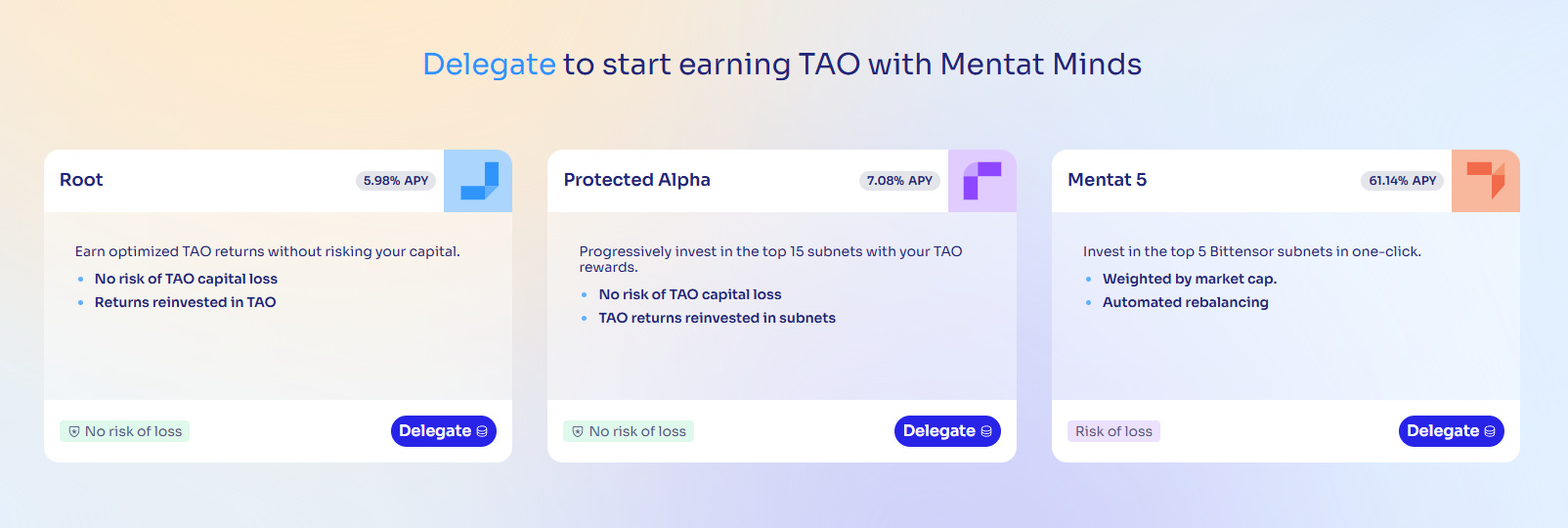
As founder Gustave Laurant puts it, Mentat is built to be the “Amazon for Subnets.” It’s a non-custodial proxy staking tool designed to make life easier for non-coders. You pick a strategy, like the top 5 subnets by market cap, and their code handles the rebalancing.
It’s a fantastic tool for accessibility.
But on Feb 19, the tool worked too well.
When SN76’s market cap artificially spiked to #1, the Mentat 5 and 15 algorithms did exactly what they were coded to do: they bought the winner and into a liquidity vacuum.
Mentat Minds addressed this quickly in their Discord:
“Since the Mentat 5 and Mentat 15 indexes are weighted by market capitalization, this affected the automatic rebalancing process. Some of our users have been affected.”
This wasn’t a custody failure. No one stole funds. The loss came from network-level price action meeting a blind algorithm.
Other indexes, like TrustedStake (which uses manual inclusion and slippage guards), sat on the sidelines and watched.
The Community Response: “Where Were the Brakes?”
While the mechanics explain how it happened, they don’t soothe the frustration in the Mentat Minds Discord.
The inevitable comparison is being drawn: If TrustedStake had manual guardrails, why didn’t the “Amazon of Subnets”? When you market convenience, users expect safety features to be standard.
Mentat has stated that the damage was contained to just 1.5% of users. They are currently analyzing the full extent of the slippage and have promised a detailed update soon.
But the elephant in the room remains: Will there be compensation? Will Mentat make users whole, or will this be treated as a harsh lesson in on-chain execution? We are waiting to find out, and their reputation may depend on how they deal with the fallout.
Why This Matters Now
I’m not writing this to pile on Mentat Minds and I’m certainly not writing it to scare you away from delegation tools.
If you’ve been following this newsletter for a while, you know how much I value the on-ramps that make Bittensor accessible to non-coders.
Your TAO never leaves your wallet. You authorize them to manage allocations and they handle the validator selection and optimization. But Subnet 76 revealed something important about the path from passive delegation to active literacy.
Tools don’t replace awareness.
In 2010, traders relying on algorithmic execution without understanding the conditions got crushed.
On Bittensor in 2026, the stakes are visible, but the lesson is the same.
Your Mentat Risk Ladder Framework
So, how do you participate without getting wrecked?
You need to move from Passive Trust to Active Supervision.
I’ve built a simple Risk Ladder to help you decide where to park your TAO in Mentat based on how much attention you want to pay.
The New Subnet Checklist
If you are manually trading or using an aggressive index, you should run this checklist before any rebalance or buy order:
Age Check: If the subnet is under 48 hours old, don’t touch it.
Validator Count: If there are no active validators online, stay away.
Liquidity Depth: If the pool is thin, hold back to avoid high slippage.
Root Claims: If emissions haven’t started flowing back to the pool, wait.
Here’s what I actually do:
I use Crucible Wallet’s Smart Allocator for my core exposure. It’s comparable to Mentat’s Protected Alpha product in that it protects principal while still participating in subnet yields of the top subnets. No unexpected exposure to anomalies like SN76 because the principal is shielded from the volatility of individual subnets.
I also have a small amount of principal invested in high-conviction subnets I have thoroughly researched. The rest I keep in root—stable, predictable, exactly what I need for my base position.
The Safety Assignment
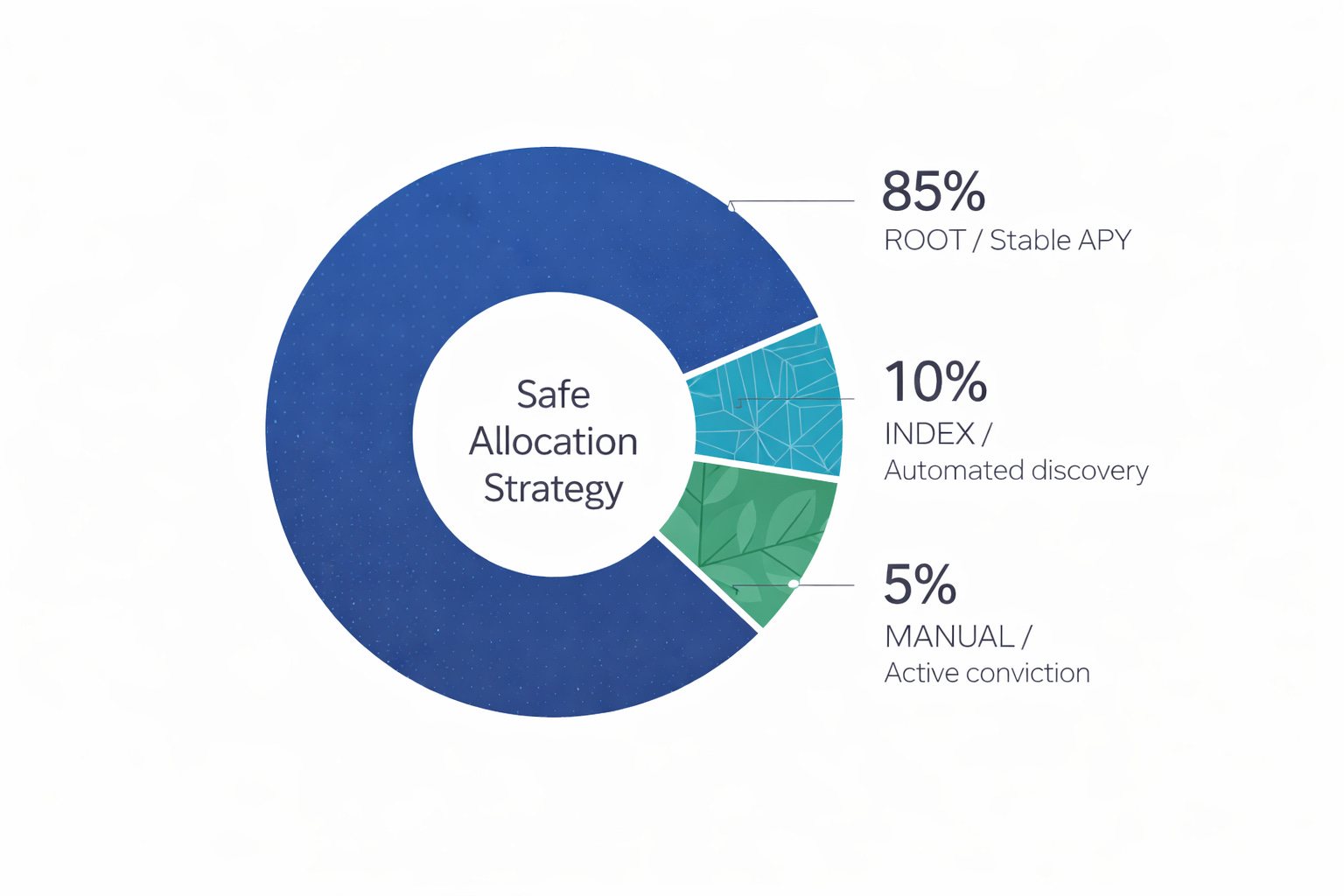
Instead of going all-in on one index, consider a split approach:
85% Root: Steady APY without surprise exposure, or invest yields in alpha using Mentat Protected Alpha or Crucible Wallet’s Smart Allocator while protecting your TAO.
10% Index: Automated discovery, small experiments with clear caps.
5% Manual: Active conviction on subnets you’ve researched.
Rebalance periodically and monitor liquidity. Start with the conservative index, scale into experimental ones as conviction grows.
The Small-Test Rule: Before committing significant capital to any index, run a small allocation through 1-2 rebalance cycles and watch how it behaves.
This Is Transparency In Action
I’ve said it before, and I’ll keep saying it because it matters:
Decentralization is messy.
In 2010, traders had to wait months to understand why their portfolios were hammered. The opacity was part of the damage.
On Bittensor, you could see the trades on Taostats. You could read Doug Sillars’ breakdown of the mechanics. You could check Mentat’s Discord announcement. You could trace the blocks yourself.
Everything is on chain.
That doesn’t minimize the sting of losses. If you are reading this and you got hit, I’m sorry. Use it as tuition.
But this does give us something the 2010 traders never had: complete visibility into what went wrong and why. Now we know and we can adjust.
What Comes Next
There’s an open-dev call likely revisiting the 7-day activation buffer. Index providers will probably add liquidity filters to initial rebalancing. Post-halving dynamics should favor utility-driven subnets over price anomalies.
The protocol will evolve. The tools will improve.
But the fundamental lesson remains:
The best tools make things easier. The best users make themselves harder to catch off guard.
As we move through the post-halving landscape, expect more edge cases, more learning moments, and if you stay thoughtful, more conviction in what you’re building.
Hit reply and tell me: where does this leave you?
Still comfortably in Root? Dipping your toes into Mentat 15 with small allocations? Going full manual with the Risk Ladder in hand?
I want to know where you’re standing after this.
Until next time.
Cheers,
Brian
Disclaimer: This is not financial advice. I am a writer documenting the Bittensor ecosystem. Always do your own research.
Thanks David, yes I think we’re still in the phase where simple conviction beats complex strategies. When you have this kind of asymmetric upside, there’s no need to chase gains on alpha tokens just to increase your TAO position. To me, this feels like Bitcoin pre-2020: the market will catch up eventually, but until then patience and discipline are the only tools we need.
Excellent article with much needed probation for the many people who lost all of their TAO. I am now definitely rethinking the "Click a strategy and just trust" method that I have used so far. Probably what happened lead Bittensor to take a second look at the complexity of dTAO and how current system may just dissuade new investors.