

I have 27 browser tabs open right now.
Three are price charts. Five are on-chain analytics dashboards. Two are X feeds tracking whale wallets. One is a Google Doc where I’m manually logging trade ideas. The rest are incubating research rabbit holes.
And then there’s my wallet: a treasure-filled filing cabinet that does exactly nothing with any of this information.
But as artificial intelligence merges with decentralized finance (a movement known as DeFAI), this kind of passive wallet is becoming obsolete.
One team in the Bittensor ecosystem is trying to change this. Subnet 45 (Talisman AI) is attempting to turn the wallet from a static asset holder into an intelligent, autonomous co-pilot. Backed by Team Rizzo, the DNA Fund, and the builders of the Talisman Wallet itself, it’s one of the most ambitious subnet plays I’ve come across.
But how do we know if it’s actually solving anything?
Most Bittensor subnet coverage focuses on emissions, alpha price charts, or miner counts. Those are lagging indicators, telling you what happened, not whether something worth building is being built.
So I’m evaluating this differently using a structured way to separate products from projects. Four questions:
What’s the business objective?
How would we know if it worked?
What problem does it actually solve?
Who is it for?
Let’s break down Subnet 45 through this lens and diagnose where the strategy shines and where the product friction is starting to mount.
The Strategic Play: What Business Objective Does Talisman (SN45) Address?
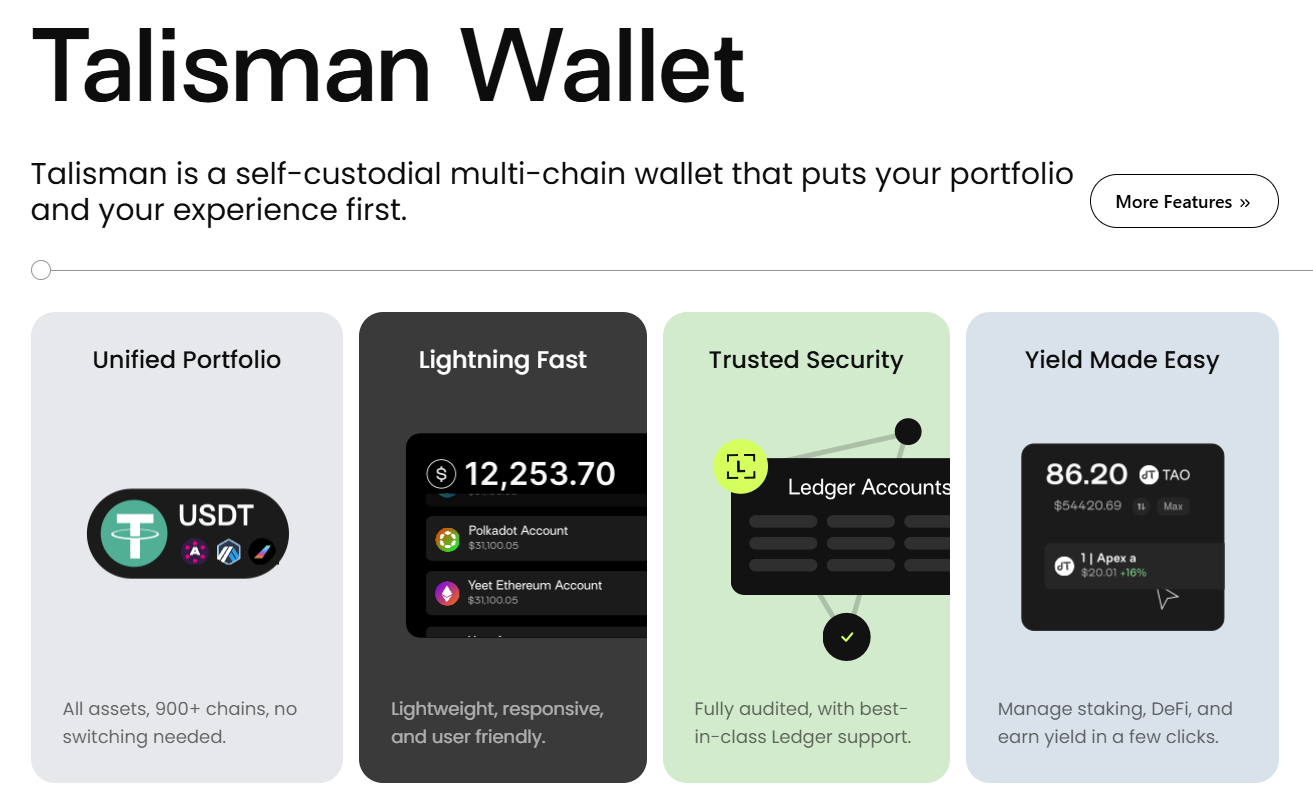
For years, Talisman has been a leading multi-chain wallet, offering a sleek interface for Ethereum, Solana, Polkadot, and Bittensor. I covered it in my wallet guide here. However, in a crowded wallet market, beautiful design is no longer a sustainable moat.
The launch of Subnet 45 is a highly strategic shift to turn Talisman into the undisputed gateway for the AI-agent economy.
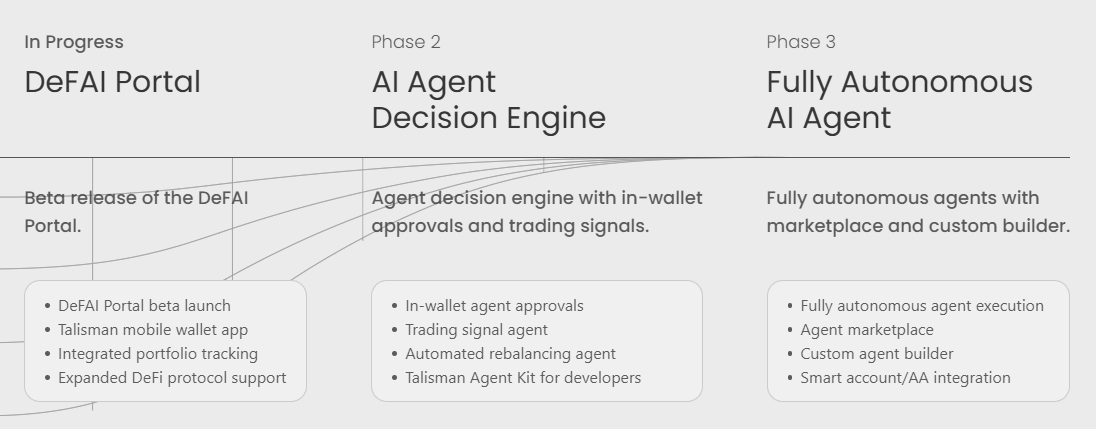
The DeFAI Integration Roadmap
Phase 1: Perception (Live)
Launch of Subnet 45 (Talisman AI) on Bittensor. Miners analyze social signals (initially from X/Twitter) to determine sentiment and technical relevance for specific subnets. Now available within the wallet.
Phase 2: The DeFAI Portal (In Progress)
Beta launch of the DeFAI Portal within the Talisman wallet. This introduces the “Decision Engine,” which provides users with trading signals and staking suggestions based on SN45 data.
Phase 3: Agentic Execution (Upcoming)
Launch of Policy-Based Automation. This allows users to set “intents” (e.g., “maximize yield on TAO”) where the agent executes rebalancing or staking within pre-defined risk boundaries and spend caps.
Phase 4: Autonomous Marketplace
A full Agent Marketplace and custom builder, allowing users to deploy specialized agents that manage liquidity autonomously across multi-chain environments.
To pull this off, the team is executing three core strategic moves:
Building a Proprietary Intelligence Moat: SN45 acts as the wallet’s decentralized “eyes and ears,” harvesting live market intelligence (social sentiment, whale movements, tokenomics). This gives Talisman an exclusive, real-time data engine you simply can’t bolt onto MetaMask or Phantom after the fact.
Constructing “Agent-Ready” Rails: Capitalizing on their May 2026 partnership with General Tensor (who recently acquired Backprop Finance), Talisman is co-developing secure multisig infrastructure. This provides the secure plumbing required for institutional funds and autonomous AI agents to co-exist safely on-chain.
Aligning Token Incentives: Transitioning from a pure software tool to a token-powered network, the SN45 Alpha token coordinates the ecosystem by rewarding miners for feed quality, acting as the currency to unlock premium wallet actions and compensating developers for new agent strategies.
Measuring Success: How Will We Know If Talisman Has Succeeded?
For Subnet 45 and the Talisman ecosystem, success isn’t just about block times or mining difficulty. The framework for their product-market fit comes down to five core metrics:
The Friction Point: What Core Problem Does It Solve?
Talisman is directly targeting three massive user frustrations:
Information Overload: you need to constantly monitor X for hype, watch block explorers for whale moves, and track technical charts, all in different apps. By the time you’ve pieced the picture together, you’re late. And you’re emotional. SN45 aggregates these fragmented workflows into a clean, structured data stream to beat FOMO-driven late execution.
The Dumb Wallet Limitation: Current wallets cannot execute conditional logic like, “Take profit on my TAO if social sentiment drops 20% and on-chain whales start selling.” The Decision Engine introduces “if-this-then-that” intelligence directly into self-custody.
The AI Trust Gap: Automated trading bots usually require you to hand over your private keys: a total non-starter for responsible people. Talisman solves this via human-in-the-loop approvals. The AI handles the heavy lifting of scanning and packaging trade batches, but you retain 100% control of your keys and must provide a one-click approval before anything hits the chain.
Who is Talisman for? The Split Identity Crisis
Talisman is currently trying to design a single product for three entirely distinct target markets:
The DeFAI Retail Power User needs simplicity. They want an invisible co-pilot that surfaces clean, one-click staking or trading opportunities without adding cognitive clutter.
The Institutional Treasury needs the exact opposite. They require explicit complexity: rigid audit trails, compliance-friendly multisig infrastructure, and custom programmatic risk boundaries.
The Autonomous AI Agent doesn’t care about a UI at all. It needs low-latency APIs, reliability, and permissionless financial rails to execute machine-to-machine commerce.
The core product risk is that the same wallet cannot be all three things without confusing all three users. Optimize for retail, and institutions view it as a toy; optimize for institutions, and retail finds it overwhelming. Trying to be everything to everyone risks alienating the core user base. Talisman needs to decide if these AI features are an invisible backend enhancement for retail, or an advanced cockpit for power users and whales.
The Product Reality: Where Ambition Meets Friction
Shifting a product from a clean consumer wallet to a decentralized intelligence layer introduces deep architectural complexity.
Ecosystem Sprawl vs. Core Focus
To the team’s credit, they are transparent on their website that the AI agent features are “Coming Soon.” The immediate issue isn’t vaporware, it’s ecosystem sprawl.
Right now, the platform is pulling the user in four different directions:
The core multi-chain wallet (pitched at retail users managing standard swaps).
The Subnet 45 AI integration.
A section dedicated to the details, status, and utility of their native community NFT collection.
A highly thematic portal for the $SEEK token (complete with its own staking and lore).

For a product whose primary value proposition is making Web3 easier, this volume of pillars creates a steep learning curve. Managing a native NFT project, a complex token ecosystem, and an advanced AI integration within a single interface risks severe feature bloat.
As the AI features roll out, the UI will need massive consolidation to keep the AI acting as a streamlined assistant rather than another overwhelming tab.
The Multi-Token Friction
The mental model for participating in this ecosystem is further complicated by asset fragmentation. Users have to navigate both $SEEK (the ERC-20 token for governance and premium agent access) and SN45 Alpha (the Bittensor-native commodity token minted via dTAO for network utility).
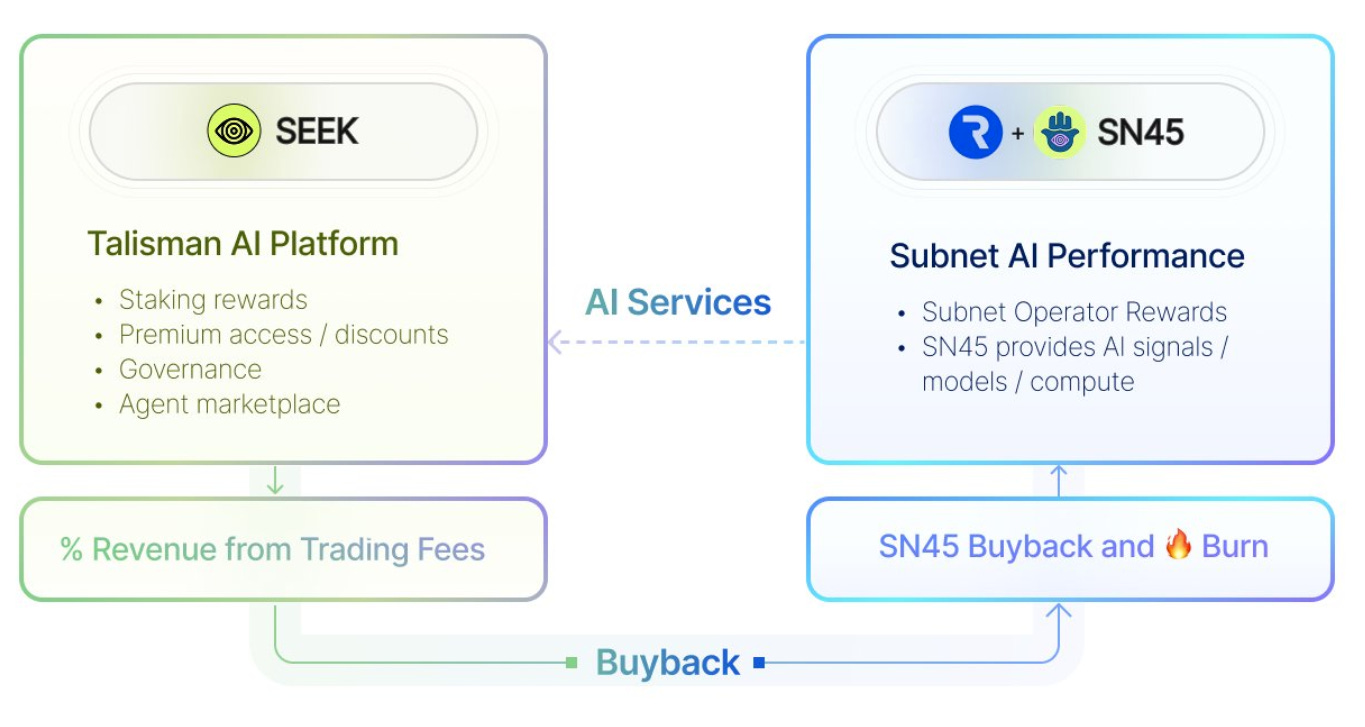
The immediate user confusion is obvious: “If I believe in Talisman AI, what am I supposed to buy?” Fortunately, leadership seems to recognize this friction. In May 2026, Frank Rizzo noted they are working on a plan to streamline the ecosystem, with the ultimate goal of having the SN45 token represent both the wallet utility and the subnet. Until that consolidation materializes, however, users are left navigating a token maze.
The Takeaway
Talisman is executing on a brilliant macro strategy. Most subnets would kill for what this team has: an existing consumer product with real users, a revenue model that doesn't depend on emissions, a functioning data network, and a credible institutional partner in General Tensor.
The partnership structure, Rizzo's subnet feeding intelligence into a wallet that people already use, bypasses the academic-only trap that strangles so much of the broader Bittensor network. And there’s a consumer product ready to use the data from day one.
But the gap between the vision and the product you can touch today is real.
The Bull Case:
The first AI Agent feature ships inside the wallet, and it's actually impressive. Adoption follows. The Alpha token unlocks real utility. The burn rate accelerates beyond baseline fees. General Tensor brings institutional flow. Talisman becomes the default intelligent wallet in Web3 with AI as a core component.
The Bear Case:
The roadmap stays ahead of shipped features for too long. Meanwhile, competitors with even larger user bases bolt basic AI tools onto their wallets (simpler, worse, but available) and the first-mover advantage evaporates. Feature bloat and token confusion stall retail adoption, and while the subnet keeps earning and the data keeps flowing, the product never catches up to the promise.
Here’s what I’m watching for: The day I open Talisman and an AI agent does something visibly useful without me asking. Maybe a trigger that fires, or a sentiment signal that saves me from a bad trade. A single automated action that I couldn’t have done as easily on my own.
When that happens, this project moves from a smart speculative bet to an essential piece of Web3 infrastructure.
The bet is smart today. But the clock is ticking, and competitors aren't waiting.
Which subnet should I evaluate next? Reply and let me know.
And if you found this useful, share it with someone who’s trying to make sense of Bittensor subnets beyond the price chart.
Until next time.
Cheers,
Brian
Disclaimer: This is not financial advice. I am a writer documenting the Bittensor ecosystem. Always do your own research.
Thank you for this article. I currently use Crucible but am interested in what Bittensor wallets may have the best options for a regular passive income seeking investor that is easy to use and does the heavy lifting.